

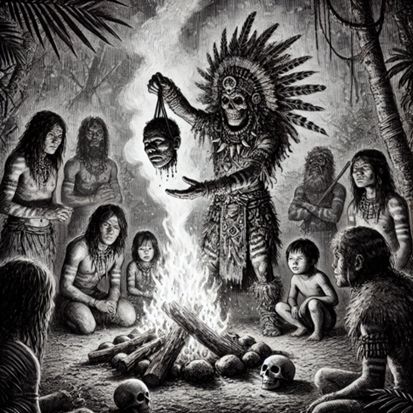
 The Amazon River was alive. It pulsed and breathed with a rhythm as ancient as the jungle itself, a sprawling artery winding through miles of dense, humid greenery. For the group of university scientists, this trip was the expedition of a lifetime, a chance to explore one of the last truly wild places on earth and collect specimens for research. But the Amazon had its secrets, and as the group would soon learn, some of them were deadly.
The team had been assembled by Professor David Carter, an esteemed anthropologist with a reputation for his work in indigenous studies. He’d brought with him a mix of graduate students and researchers from the biology and anthropology departments, each of them eager to make a name for themselves by contributing to the field. Among them was Dr. Lila Reyes, a botanist with a particular interest in rare medicinal plants, and Jackson “Jack” Lowell, a graduate student specializing in ethnography.
They had been traveling up the Amazon for days, the dense forest pressing in on both sides of the river, its thick canopy casting everything in a greenish, filtered light. Their guide, a quiet, weathered man named Hector, had warned them about the dangers of the jungle—poisonous plants, deadly animals, and, of course, the intense heat and humidity. But nothing had prepared them for the eerie sense of isolation that settled over them as they ventured further from civilization, deeper into a world that seemed almost primeval.
By the fifth day, they had traveled far beyond the villages, deep into an area rarely visited by outsiders. The river narrowed, its murky water flowing slowly, thick with silt and rotting vegetation. It was here, in the heart of the jungle, that the true horror began.
It started innocently enough. Dr. Reyes had spotted an unusual vine hanging from a tree on the bank and asked Hector to bring the boat in closer so she could examine it. As they neared the shoreline, Jack caught sight of something strange, swaying gently from a tree branch above them.
At first, he thought it was an animal carcass, maybe a monkey or a bird, but as the boat drew closer, his stomach twisted with a sickening realization. It was a body—a human body, suspended from the tree by its legs, its arms hanging limp, its skin pale and waxy.
But the most disturbing part was the head—or rather, the absence of it. The neck ended in a rough, jagged stump, blood long dried, the skin puckered around the cut as though the head had been roughly sawed off. Jack felt bile rise in his throat as he stared, unable to tear his gaze away from the horrific sight.
“Professor Carter,” he managed to choke out, his voice barely more than a whisper. “Look…”
The rest of the team turned to see what had caught his attention, and a collective gasp filled the boat. Dr. Reyes covered her mouth, her face pale, her eyes wide with horror.
“What… what the hell happened to him?” she whispered, her voice trembling.
Hector, their guide, looked away, his face grim, his eyes filled with a mix of fear and resignation. “The Jivaro,” he muttered, barely audible. “The head hunters.”
The words sent a shiver down Jack’s spine, a chill that cut through the humid air. He’d heard stories of the Jivaro, an indigenous tribe known for their practice of shrinking human heads, but he’d assumed they were exaggerated, the stuff of myths and legends. Surely such practices were long abandoned, remnants of a time when the jungle was ruled by rituals and spirits.
But the body hanging in the tree told a different story.
Professor Carter cleared his throat, forcing himself to remain calm, though his face was pale. “We need to document this,” he said, his voice steady but strained. “Jack, take some photographs. Dr. Reyes, make note of our location. We need to record everything for the authorities back home.”
As Jack raised his camera, Hector grabbed his arm, his face tense. “You don’t understand,” he said, his voice low, urgent. “This is a warning. The Jivaro don’t want us here. If they’ve left this for us to see, it means we’re trespassing… and we’re in danger.”
Professor Carter frowned, shaking his head. “We’ve come too far to turn back now, Hector. The university has invested in this expedition. This is just a scare tactic, meant to keep us from getting close to their territory. We’ll be careful, stay by the river, and keep moving forward. We won’t harm anything or anyone.”
But Hector’s expression was grim. “You may not intend harm, but to them, you are invaders. The Jivaro don’t forgive… and they don’t forget.”
Despite his warning, Professor Carter remained resolute, and reluctantly, Hector guided the boat back into the main current, steering them further upriver. But as they moved away from the body, Jack couldn’t shake the feeling that they were being watched, that a pair of unseen eyes followed their every movement from the shadows.
The jungle seemed darker, more oppressive, as though it, too, resented their presence. The air grew heavier, the silence punctuated only by the occasional call of a distant bird or the rustle of leaves as unseen creatures moved through the underbrush. And always, just beyond the edge of sight, was the faint, haunting sense that something was following them, moving silently through the trees, hidden but ever-present.
As night fell, they set up camp on a narrow stretch of shoreline, the air thick with the scent of damp earth and decaying vegetation. The team gathered around a small fire, their faces lit by the flickering flames, their expressions tense, uneasy.
They spoke little, each of them lost in their thoughts, their minds haunted by the image of the headless body hanging in the tree. Jack lay awake long after the others had fallen asleep, his mind racing, his nerves on edge. Every sound, every rustle of leaves, sent a fresh wave of fear through him, and he couldn’t shake the feeling that they were not alone.
In the early hours of the morning, he heard a faint, shuffling sound coming from the edge of camp. Heart pounding, he sat up, straining his ears, peering into the darkness. The fire had burned low, casting only a dim glow across the campsite, and the jungle was alive with shadows, moving, shifting in the darkness.
And then he saw it.
Just beyond the edge of the firelight, hanging from a low branch, was another body. Like the first, it had been stripped of its head, the neck ending in a jagged stump, blood still fresh, trickling down its chest in dark, sticky rivulets. But this time, he recognized the clothes—the khaki shirt, the hiking boots. It was one of their own, a young researcher named Michael who had joined the team only a few months prior.
Jack’s scream pierced the silence, waking the others, and within moments, the camp was alive with the sound of panicked voices, cries of horror as they took in the grisly sight before them.
Professor Carter staggered back, his face ashen, his eyes wide with terror. “We… we have to get out of here,” he stammered, his voice barely more than a whisper. “This isn’t… this isn’t part of the expedition anymore. This is a nightmare.”
But Hector shook his head, his face grim. “It’s too late,” he said, his voice filled with a quiet, resigned fear. “Once the Jivaro mark you, there’s no going back. You’ve seen too much, trespassed too far. They will hunt you… until they have your heads.”
The following day was a blur of panic and desperation. The team packed up camp, abandoning their equipment as they fled back downriver, their boat slicing through the water as they raced to put as much distance as possible between themselves and the jungle that seemed to close in around them.
But as they moved, they began to notice signs—strange symbols carved into the trees, small totems made from bone and feathers, marking their path like a twisted trail of breadcrumbs. It was as though the Jivaro were toying with them, allowing them to believe they were escaping, only to remind them, with each new sign, that they were never truly alone.
As night fell once more, they found themselves forced to stop, their exhaustion too great to continue. They set up a hasty camp, their nerves frayed, their faces pale and haunted. No one slept, each of them keeping a wary eye on the shadows, waiting for the inevitable.
And just before dawn, the silence was broken by a low, haunting chant, drifting through the jungle like a ghostly echo, filling the air with a sense of dread that sent shivers down their spines.
The Jivaro were coming.
One by one, they began to see them—dark figures moving through the trees, their bodies painted in red and black, their faces hidden behind masks carved from bone and wood, adorned with feathers and beads. They moved silently, slipping through the shadows like wraiths, their eyes fixed on their prey with a hunger that was both ancient and terrifying.
As the first of the Jivaro closed in on their camp, Jack realized, with a sickening sense of horror, that there was no escaping the head hunters. They had been marked, hunted, and now, one by one, they would fall.
And their heads, shrunk and preserved, would join the trophies hanging from the trees, a chilling testament to the jungle’s unyielding, insatiable hunger.
The Jivaro tribe was more than a shadow in the jungle. They were a people bound by ancient rites, their history steeped in a complex system of beliefs and rituals, each one darker than the last. For centuries, they had lived deep within the Amazon, their territory shielded from the modern world by miles of dense forest and treacherous swamps. Outsiders knew them only by the stories that drifted out of the jungle, tales of fierce warriors and terrifying rites, of bodies without heads and trophies made from the shrunken skulls of their enemies.
As the group of scientists ventured further up the Amazon, they were stepping into a world that existed beyond time—a place where the Jivaro’s dark traditions had gone untouched for centuries. It was here, within the depths of the jungle, that the tribe’s legacy of headhunting and shrunken heads, or tsantsa, was born.
The practice of shrinking heads was not an act of mere brutality for the Jivaro; it was a profound ritual, deeply rooted in their spiritual beliefs. The Jivaro believed that every person possessed three souls, and among them was one known as the muisak, a soul that held the potential for vengeance and violence. According to Jivaro lore, when a person was killed, especially by violent means, the muisak would remain restless, its thirst for revenge unquenched.
In their view, an enemy’s head was more than a trophy; it was a vessel containing the spirit of their foe, a spirit that, if left unchecked, would return to harm them. To prevent this, they developed the ritual of head-shrinking, a process that would trap the muisak within the head, rendering it powerless and allowing the spirit to remain under the control of the warrior who took it. Only then could they possess the strength, power, and knowledge of their enemy.
The shrinking process itself was gruesome, taking days to complete. The head was carefully removed, and the skull discarded. Then, the skin was boiled, treated with herbs, and painstakingly shaped, its features preserved in a grotesque mask that was sewn shut, locking the spirit inside. The head was worn or displayed, serving as both a trophy and a charm to protect the Jivaro warrior from the dangers of the jungle—and from the vengeful spirits of his enemies.
To the Jivaro, each tsantsa represented a battle won, a soul subdued, and an enemy defeated. And with every head claimed, the warrior grew stronger, his spirit infused with the power of his foes.
Centuries ago, before the arrival of European explorers, the Jivaro were locked in a fierce conflict with neighboring tribes. This “forgotten war,” as Hector called it, was a brutal clash fought over territory, resources, and the right to control the sacred land that the tribes believed was favored by the spirits of the jungle.
The Jivaro were relentless warriors, fierce and unyielding, and they wielded the practice of headhunting as a weapon of psychological terror. Their enemies knew that to fall to a Jivaro warrior meant more than death—it meant a fate that would bind them to the jungle, their souls trapped in the twisted, shrunken heads that hung from the warriors’ belts. Over time, the Jivaro’s enemies began to fear them as demons rather than men, as something otherworldly and invincible.
According to legend, the war reached its peak during a season of drought and famine, when the rivers ran low and the jungle grew silent, as though mourning the blood spilled on its soil. The Jivaro priests, known as uwishin, called upon their gods for aid, performing rituals that invited spirits to possess their warriors, strengthening them, filling them with a rage that could not be tamed.
The priests chanted into the night, calling forth ancient forces, and under their guidance, the warriors hunted their enemies relentlessly, taking heads, binding souls, building a collection of tsantsa that became both a warning and a curse.
In the end, the Jivaro emerged victorious, their enemies scattered, their villages abandoned. But their victory came at a price. The priests warned that the spirits they had called upon were not easily appeased, that their power demanded blood, tribute, and respect. And so, the tradition of headhunting persisted, becoming an essential part of the tribe’s existence—a dark legacy they could not escape, bound to them by blood and bone.
By the 20th century, many aspects of Jivaro life had remained unchanged for hundreds of years, but their isolation was slowly being eroded. Missionaries, explorers, and researchers had begun to make their way into the depths of the Amazon, bringing with them stories, technology, and diseases that threatened to disrupt the tribe’s way of life. Most tribes had given up old practices, forced to assimilate in exchange for survival.
But the Jivaro resisted. They remained wary of outsiders, viewing them with suspicion and hostility. To them, these newcomers were intruders, disrespecting the land and the spirits that dwelled within it. The Jivaro believed that the spirits of their ancestors still roamed the jungle, watching over them, and that any disruption to the natural balance would awaken their anger.
For the Jivaro, the arrival of strangers meant one thing: danger. And to protect themselves, they turned once more to the ancient rite of headhunting, marking the borders of their territory with shrunken heads, a warning to all who dared to venture too close. To the Jivaro, this was not an act of violence but one of survival, a declaration that they would not surrender their land or their ways, no matter the cost.
Hector, who knew the jungle as well as any native, explained it to the scientists in hushed tones, his voice heavy with the weight of the tribe’s history. “The Jivaro are not like us,” he said, his face pale, his eyes dark with fear. “They do not see life and death as we do. They believe that to protect their people, they must preserve their enemies, keep their spirits bound to this world. It is a sacred duty—a curse, perhaps, but one they carry without hesitation.”
The scientists began to realize that the Jivaro were more than just warriors; they were bound to the jungle by a pact as old as the trees themselves, a pact that demanded loyalty, blood, and reverence. They were guardians of a balance that was not easily understood, keepers of a darkness that lurked beneath the canopy, woven into the very fabric of the land.
But they also understood that, for the Jivaro, any outsider who trespassed on their land was a threat to this delicate balance. The scientists’ presence in the jungle was an affront to the spirits, a reminder of the conflicts and losses that the Jivaro had endured over centuries. To the tribe, each of the scientists was an enemy, a soul to be subdued and bound to the land through the rite of the tsantsa.
As they moved deeper into the jungle, the scientists began to notice strange signs—small totems hanging from the trees, painted rocks arranged in peculiar patterns, symbols scratched into the bark. Hector recognized them as markers, warnings left by the Jivaro to mark the boundaries of their territory. But the scientists were undeterred, driven by a fascination that bordered on arrogance, unaware of the danger that lurked just beyond the edge of the light.
That night, as they huddled around the fire, Jack felt a cold wind brush against his neck, a chill that cut through the stifling humidity. He glanced around, the shadows flickering in the firelight, and for a brief moment, he thought he saw a figure standing just beyond the reach of the flames—a figure with dark, hollow eyes, its face twisted into an expression of rage.
He shook his head, telling himself it was a trick of the light, a product of exhaustion and fear. But deep down, he knew there was something watching them, something ancient and vengeful, drawn to their presence like a moth to flame.
The jungle was silent, too silent, as though it held its breath, waiting for the inevitable.
And as the night wore on, the chanting began again, low and haunting, drifting through the trees like the murmur of ghosts.
The Jivaro were coming.
And this time, there would be no escape.
The scientists had thought their greatest fear would be the Jivaro hunters, the shadowed figures moving silently through the jungle, their painted faces and piercing eyes peering from the dense foliage. But as the nights grew darker and their journey took them deeper into the Amazon, they began to feel another presence—a cold, oppressive force that seemed to permeate the very air around them, watching them from the shadows, filling their dreams with dark whispers and nightmarish visions.
Hector, their guide, had warned them of the spirits that haunted the jungle, souls trapped between worlds, bound to the land by centuries of blood and conflict. The Jivaro were feared by those who knew them, yes, but the spirits of the jungle were something else entirely. To the Jivaro, these spirits were guardians, protectors of the land, watching over their territory, taking revenge on any intruder who dared to disturb the balance. And now, as the scientists neared the heart of Jivaro territory, the spirits seemed to come alive, their whispers filling the air, their forms flickering in the corners of the scientists’ vision.
The group set up camp on a narrow patch of dry ground, surrounded on all sides by dense jungle. They had decided to rest only for a few hours before continuing downstream, hoping to reach safer ground by dawn. The air was thick with tension, each of them painfully aware of the danger that lurked in the shadows. Jack, who hadn’t slept in days, leaned against a tree, his flashlight flickering as he scanned the darkened canopy.
It was past midnight when he saw it—a faint, shimmering shape moving between the trees, drifting silently through the undergrowth. At first, he thought it was a trick of the light, a reflection on the leaves, but as he squinted, he realized the shape had a form, a pale, ghostly outline that took on the shape of a person. Its face was hollow, eyes dark and empty, a vacant, staring expression that seemed to pierce right through him.
Jack’s breath caught in his throat, his heart pounding as he watched the figure. It moved slowly, gliding across the ground without sound, its gaze fixed on him. He couldn’t move, couldn’t speak; it was as though the very air had turned to ice, paralyzing him in place.
The figure raised an arm, pointing directly at him, its eyes dark and accusatory. And then, with a soundless scream, it vanished, leaving only the faint echo of a presence lingering in the air, a cold shiver that made his skin crawl.
When he finally found his voice, he stumbled over to Professor Carter, his face pale, his eyes wide with terror. “Professor… there’s something out there,” he stammered, his voice trembling. “I saw… I don’t know what it was, but it wasn’t human.”
Carter frowned, shaking his head. “Jack, we’re exhausted. This jungle plays tricks on the mind. Shadows, reflections—our imaginations can run wild out here.”
But Jack shook his head, his voice barely a whisper. “It wasn’t a trick. It was real.”
As the night wore on, more of the group began to feel the strange, unexplainable presence in the jungle. Dr. Reyes awoke to the sensation of someone standing over her, watching her in the darkness. She opened her eyes, expecting to see one of her colleagues, but there was no one there—only the faint scent of decaying vegetation and the cold, still air. She tried to shake off the feeling, telling herself it was just nerves, but she couldn’t escape the sense of being watched, the prickling sensation that crawled over her skin like an unseen hand.
Around the campfire, they began to hear faint whispers, voices that seemed to drift through the air, calling their names in low, mournful tones. The voices were soft, barely audible, but they grew louder as the night wore on, filling the silence with a chorus of whispers that seemed to come from everywhere and nowhere.
“Elise…”
“Jack…”
“David…”
Each voice was different, as though they were the echoes of lost souls, spirits calling out from the depths of the jungle, trapped in an eternal limbo. The scientists huddled closer to the fire, their faces pale, their eyes darting nervously into the shadows, but the whispers continued, relentless, filling the night with a dreadful, suffocating presence.
Professor Carter tried to calm them, his voice steady but strained. “They’re just echoes,” he said, though his own hands trembled. “The jungle is playing tricks on us.”
But Hector, their guide, shook his head, his face grim. “They are the spirits of the lost,” he said quietly. “The souls of those who died here, victims of the Jivaro, trapped in the jungle by the power of the tsantsa. They cannot leave… and they are angry.”
On the third night, they found themselves surrounded by what seemed to be a collection of eerie totems—figures crafted from bones, feathers, and scraps of fabric, tied together and hung from the trees like grotesque ornaments. Each one had a small, hollowed-out head, painted with eyes that stared blankly ahead, watching over the path like silent sentinels.
But these weren’t the only markers. Near the totems, they found a collection of shrunken heads, strung together like a necklace, each one shriveled and preserved, their faces twisted into expressions of agony. Dr. Reyes had to turn away, her stomach churning as she realized what they were looking at—these were the tsantsa, the shrunken heads of the Jivaro’s enemies, bound to the trees to protect the tribe’s territory.
As they stood there, frozen in horror, they began to feel a presence in the air, a heavy, oppressive force that pressed down on them, filling their lungs with the thick scent of decay. And then, slowly, one of the shrunken heads seemed to move, its hollow eyes turning toward them, its mouth opening in a silent scream.
Hector grabbed Jack’s arm, pulling him back. “Don’t look,” he warned, his voice shaking. “The spirit of the tsantsa is bound to the jungle. It knows we’re here… and it will come for us if we don’t leave.”
But as they tried to move away, the whispers returned, louder, angrier, filling the air with a haunting, disembodied chorus of voices, each one filled with rage and sorrow, a dark, echoing chant that seemed to rise from the very ground beneath them.
The voices grew louder, filling their minds with visions of the past—scenes of brutal conflict, of warriors tearing each other apart in a frenzy of violence, their bodies left to rot in the jungle, their heads taken as trophies. Each vision was more horrific than the last, each one driving them deeper into a terror they could not escape.
They ran, stumbling through the dense foliage, their hearts pounding, their breaths ragged, but the visions followed them, filling their minds with images of death and decay, each one more vivid, more terrifying, as though the spirits were forcing them to relive the horrors of the past.
As dawn broke, they found themselves on the edge of a clearing, their faces pale, their bodies trembling from exhaustion and fear. But even in the light of day, they could feel the presence of the spirits, watching them from the shadows, waiting for the night to return, for the chance to draw them back into the darkness.
Hector gathered them together, his face grim. “The spirits are bound to the jungle by the Jivaro. They cannot leave, cannot move on. They are trapped in the tsantsa, their souls bound to the heads that hang from the trees. And now, they believe we are part of that ancient debt, that we are here to disturb their rest.”
Dr. Reyes shuddered, glancing back at the dense foliage behind them. “What… what do they want from us?”
Hector looked away, his voice low, heavy with a terrible knowledge. “They want what the Jivaro want. They want to bind us to this land, to add us to their collection. They want us to join them… in death.”
The scientists stared at each other, their faces pale, their minds racing with the horror of what lay ahead. They knew now that their journey was no longer a simple expedition; it was a battle for survival, a desperate attempt to escape a jungle that seemed intent on consuming them, body and soul.
And as they gathered their things, preparing to move once more, they could feel the eyes of the spirits watching them, waiting, biding their time.
The jungle was alive, filled with the souls of the lost, and as night fell once more, they knew one thing for certain:
They would not leave without paying a terrible price.
With every step deeper into the jungle, the scientists felt the spirits’ presence growing stronger, their whispers louder, more desperate. The air grew thick and heavy, as though the very atmosphere were charged with a malevolent energy that seeped into their skin, filling their lungs, clouding their minds. They were no longer just lost; they were trapped in a living nightmare, each turn in the dense foliage leading them further from the safety of the river and closer to the spirits that hunted them.
The team moved in silence, each one haunted by visions they couldn’t explain. Jack kept seeing that hollow-eyed apparition from the night before, its empty stare following him, boring into his mind, forcing him to relive memories that weren’t his own. And in every memory, he was an outsider, an intruder, glimpsing moments of violence, of ritual, of rage.
As the light began to fade, the jungle around them grew darker, the shadows longer, stretching like fingers eager to pull them into the depths. Hector urged them to keep moving, his voice taut with fear.
“We have to keep going,” he whispered, his gaze darting around the trees. “The spirits don’t like the daylight, but as night falls, they grow stronger. They’ll feed on our fear, our despair. If we stop, we’re as good as dead.”
But the team was exhausted, their bodies and minds battered by days of fear and sleepless nights. Professor Carter, who had led them with unwavering determination, was pale and shaken, his eyes hollow, haunted. Dr. Reyes stumbled, clutching at a tree to steady herself, her face streaked with sweat and grime.
“We can’t keep this up,” she panted, her voice barely more than a whisper. “We’re lost. They’re driving us further in, like… like prey.”
As the team staggered into a small clearing, they froze, their breaths caught in their throats. All around them, scattered across the ground and hanging from the trees, were dozens of shrunken heads, their faces twisted in expressions of horror, their mouths sewn shut, their eyes hollow and empty.
Jack felt a wave of nausea rise in his stomach as he realized these were no ordinary totems; they were the tsantsa, the spirits of those the Jivaro had claimed. Each head was bound to the jungle, forced to serve as an eternal guardian, a sentry to warn the living to stay away. But as Jack looked closer, he noticed something chilling—the heads weren’t ancient artifacts. They were fresh.
Hector muttered a prayer under his breath, his voice shaking. “These are the ones who came before. Other expeditions, other travelers. They thought they could pass through, just like us. But the Jivaro took them… and now they guard this land forever.”
A hush fell over the team as they looked around, each of them feeling the weight of the jungle pressing down on them, filling their minds with the inescapable sense of doom. It was then that they noticed a figure watching them from the shadows, a tall, gaunt form half-hidden by the foliage.
The figure stepped forward, revealing a face painted with dark stripes and white markings, his eyes cold, calculating. He held a long spear, its tip glinting in the fading light, and around his neck hung a necklace of small shrunken heads, each one an eerie, silent witness to the fate that awaited them.
One by one, more figures emerged from the jungle, surrounding the team, their faces expressionless, their eyes dark and unblinking. They moved in silence, their presence as ghostly as the spirits themselves, as though they were more shadow than flesh.
Hector’s face turned ashen as he recognized the leader. “This is the shaman,” he whispered. “He is the one who binds the souls to the land, the one who performs the ritual of the tsantsa. Once he marks you, there is no escape.”
The shaman raised his spear, his gaze fixed on the team, and in that moment, Jack felt an overwhelming sense of despair. They were outnumbered, surrounded, and the jungle itself seemed to close in around them, cutting off any chance of escape.
But as the shaman stepped forward, Hector did something unexpected. He dropped to his knees, his head bowed, speaking in the Jivaro language, his voice low, pleading. The shaman paused, listening, his face impassive, and for a moment, the jungle was silent, the spirits watching, waiting.
Hector’s voice grew louder, more desperate, and finally, the shaman responded, his tone harsh, commanding. Hector nodded, his face pale, his expression one of grim acceptance as he turned to the team.
“He says we can live,” Hector translated, his voice shaking. “But only if we pay tribute. Only if we agree to let him take one of us.”
A chill swept over the group, the realization of what Hector was saying sinking in. The shaman demanded a sacrifice—a life to appease the spirits, to allow the rest of them to escape. It was the only way to break the curse that held them, to release the spirits bound to the jungle.
Professor Carter stepped forward, his face set with determination. “No. I’ll go,” he said, his voice calm. “This was my expedition. I led us here. I’ll stay.”
But Hector shook his head, his eyes dark with fear. “He doesn’t want you,” he murmured, his voice barely audible. “He wants the one who saw the spirits. The one who heard their whispers.”
Jack’s heart sank as he realized Hector was looking at him.
The team fell silent, each of them grappling with the horror of what was being asked. Jack felt a wave of panic rise in his chest, but as he looked around, he saw the desperation in their faces, the terror that filled their eyes. They had been marked, hunted, and now, the only way out was to pay the ultimate price.
“I’ll do it,” he whispered, his voice shaking, his mind numb with fear. “If it means the rest of you can go… I’ll do it.”
The shaman gestured for Jack to follow, his expression unreadable, his eyes dark and unyielding. Jack glanced back at his friends, his heart heavy, knowing that this would be the last time he would see them. Dr. Reyes’s face was streaked with tears, and Professor Carter’s expression was one of quiet resignation, his shoulders slumped under the weight of guilt.
As he followed the shaman into the jungle, the sounds of the team’s footsteps faded, leaving only the silence of the trees, the low hum of the spirits that filled the air. Jack could feel their presence all around him, a chorus of whispers that grew louder with each step, filling his mind with visions of the past, the horrors that had bound the Jivaro and the spirits together in a pact of blood and darkness.
The shaman led him to a small clearing, a circle of stones marking the ground, each one etched with symbols of protection, of binding. Jack knelt at the shaman’s command, his heart pounding as the shaman began to chant, his voice rising in a haunting melody that seemed to call the spirits to him, drawing them closer, binding them to the ritual.
As the shaman continued, the air grew colder, the shadows deepening, and Jack felt a terrible weight settle over him, pressing down on his chest, filling his mind with a darkness that was all-consuming. The spirits had come, summoned by the shaman’s chant, their forms flickering in the trees, their hollow eyes fixed on him, watching, waiting.
The shaman raised his hands, his voice rising to a crescendo, and as he spoke the final words of the ritual, Jack felt a sudden, sharp pain in his chest, a sensation of something being pulled from within him, tearing through his mind, his soul, leaving him hollow, empty.
His vision blurred, the world fading into darkness, and in his final moments, he saw the faces of the spirits around him, their expressions calm, peaceful, as though they were finally at rest.
And then, there was nothing.
The remaining members of the team stumbled back to the river, their faces pale, their bodies trembling, but they were alive. As they reached the edge of the jungle, they felt a strange lightness, a sense that the darkness that had followed them was gone, lifted by the sacrifice they had left behind.
They knew they would never forget Jack’s final act, the price he had paid to release the spirits from their torment, to free them from the curse that had bound them to the jungle. But as they looked back at the dense, silent trees, they knew one thing for certain:
The jungle had claimed its due.
And as they boarded the boat, drifting away from the haunted land that had nearly taken them all, they could feel the spirits watching, lingering, their whispers carried on the wind—a reminder of the darkness that lay hidden in the heart of the Amazon, waiting for the next unwitting soul to wander too close.
The End
